

Please Choose Your Language
Views: 0 Author: Site Editor Publish Time: 2026-04-27 Origin: Site


While functionally simple, the shuttle valve remains a critical fail-safe component in modern fluid power systems. You rely on it for precise control logic. Selecting the wrong specification directly causes cross-port leakage. It leads to sluggish shifting or unexpected system downtime. Engineers and procurement teams face a tough reality today. Designing redundancy or dual-control logic requires careful component selection. You must balance immediate mechanical response times against rugged, long-term reliability. A poor choice ultimately compromises vital safety loops. This comprehensive guide breaks down how these dynamic components operate mechanically. We explore key evaluation dimensions for successful system integration. You will learn exactly how to select the precise valve architecture for your specific hydraulic or pneumatic circuit needs. Understanding these nuances prevents costly field failures.
A shuttle valve acts as an "OR" logic gate in fluid circuits, automatically directing the higher-pressure flow from two isolated inlets to a single common outlet.
The 3 way shuttle valve configuration is standard for redundant braking, load sensing, and dual-station control applications.
Selection decisions must prioritize internal seal design (ball, poppet, or spool) based on acceptable leakage rates and shift-pressure thresholds.
Total Cost of Ownership (TCO) is driven not by the unit price, but by the valve's resistance to "stiction," cycle fatigue, and maintenance accessibility.
Industrial systems routinely encounter complex business problems regarding power routing. Many critical machines require backup power sources. They might also utilize dual-station controls for operator safety. These applications demand automatic crossover between isolated fluid lines. You cannot always rely on electronic sensors or solenoid switches to manage this crossover reliably. Electronic components can fail during extreme power outages. Mechanical fluid logic offers a robust alternative. This valve solves the crossover problem perfectly. It operates entirely on fluid mechanics to prevent dangerous fluid mixing.
How do they work? They rely on the physical resolution of competing pressures. Fluid enters the body from one of two designated inlet ports. The higher fluid pressure exerts physical force against an internal element. This internal element might be a solid ball, a guided poppet, or a machined spool. The higher pressure physically shifts this element across the internal chamber. Once shifted, the element firmly blocks the lower-pressure inlet. The high-pressure fluid then flows freely out of the single common working port. This simple, elegant mechanism defines the 3 way shuttle valve. It strictly features two inlets and one shared outlet.
Engineers evaluate the success of this mechanical operation using three strict criteria. First, the unit must guarantee zero cross-contamination between the competing circuits. Second, it should exhibit a minimal pressure drop (ΔP) during normal, steady-state operation. Third, it must deliver an immediate mechanical response the exact moment inlet pressures fluctuate. A slow shift creates momentary vulnerability in the system.
Successful integration requires careful attention to line lengths. You should keep pilot lines as short as physically possible. Long hoses act like accumulators. They absorb the initial pressure wave. This expansion delays the shift timing significantly. You must also account for the volume of fluid required to physically move the internal element. This small volume transfers into the blocked line during the shift. You must ensure the blocked line can accept this minute fluid displacement without spiking in pressure.
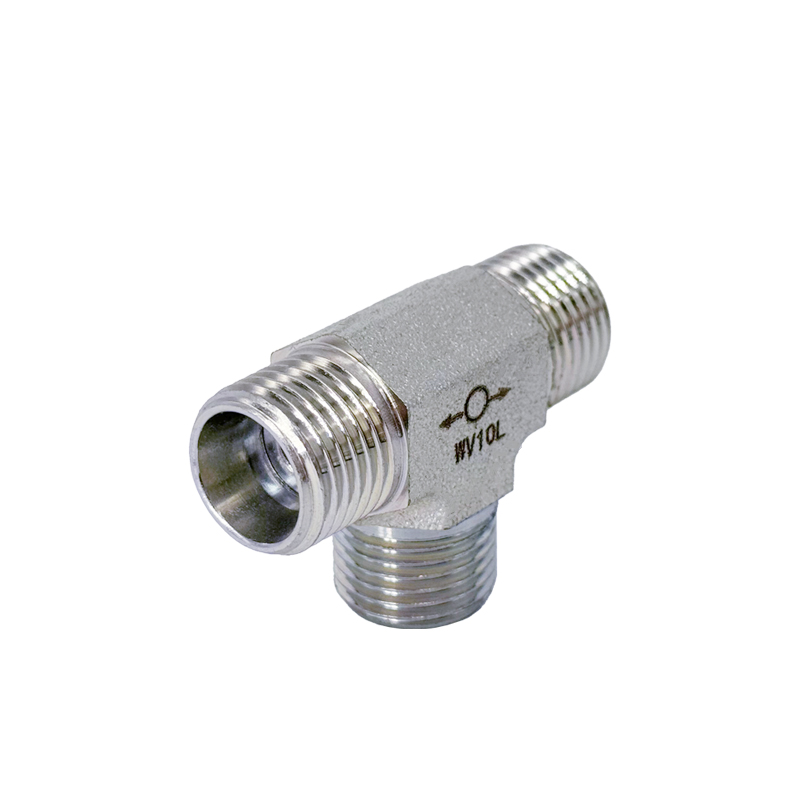
Modern hydraulic systems prioritize maximum energy efficiency. Variable displacement pumps require precise control loops to minimize wasted energy. Engineers frequently deploy these valves within load sensing circuits to achieve this operational goal. They connect multiple machine actuators to a single main pump. The valve array identifies the highest operating pressure among all active circuits simultaneously. It mechanically transmits this maximum load signal back to the pump's compensator mechanism. The pump then adjusts its output flow accordingly. This intelligent routing prevents unnecessary energy consumption. It drastically reduces overall system heat generation.
Safety-critical environments demand absolute failsafe reliability. Aerospace controls and heavy machinery braking systems simply cannot fail in the field. They rely entirely on redundant safety loops. A primary hydraulic pump typically supplies the main operating pressure. If this primary source drops pressure suddenly, a secondary standby pump must take over instantly. These units automatically sense the primary pressure loss. They shift immediately to route emergency fluid power directly to the brakes or flight controls. A delayed mechanical shift in these environments causes catastrophic machine failure.
Many industrial machines require manual operation from multiple physical locations. A single heavy-duty hydraulic cylinder might need control from a main cab and a remote pendant. Dual-station actuation allows independent operation from two separate pilot control valves. When an operator actuates the first remote station, high-pressure fluid enters the first inlet. The internal element shifts rapidly to block the second station's inlet. This action effectively isolates the unused control line. It prevents the active fluid from back-driving into the idle circuit. Once the operator releases the control, the line pressure equalizes. The system resets for the next command.
The internal shifting element dictates the entire performance profile of the unit. You must match the architecture to your specific operational realities. We categorize these devices into three primary design families.
Ball designs utilize a highly polished steel sphere as the internal shifting element. The fluid pushes the ball against a machined seat to seal the lower-pressure port.
Pros: They feature an incredibly simple construction. This simplicity makes them highly cost-effective for large-scale manufacturing. The spherical shape naturally rotates during operation. This rotation creates a self-cleaning effect against the valve seats. They handle mild fluid contamination remarkably well.
Cons: They can suffer from severe chattering at low pressure differentials. If both inlet pressures remain nearly equal, the ball bounces violently between seats. Furthermore, the ball creates a very narrow point-contact sealing area. This tiny contact patch wears much faster under high-cycling conditions.
Poppet designs use a guided, cone-shaped element. The poppet matches perfectly with a tapered seat to block fluid flow.
Pros: They deliver exceptional low-leakage performance. The guided nature of the poppet ensures precise alignment every single cycle. They offer very fast shifting speeds. Engineers consider them ideal for high-pressure hydraulics and load-holding applications.
Cons: They typically exhibit a slightly higher pressure drop compared to open ball types. The internal flow path contains more restrictive geometry. They are also moderately sensitive to fluid contamination. Hard debris can easily dent the precision-machined tapered seat.
Spool architectures use a cylindrical sliding element inside a machined bore. The spool slides back and forth to open and close internal flow galleries.
Pros: They provide exceptionally smooth operation. They handle very high flow rates without chattering. The large surface area of the spool prevents the erratic oscillation seen in ball designs.
Cons: They remain highly vulnerable to "stiction" (sticking friction). If you leave them inactive for long periods, microscopic particles wedge into the clearance gap. The spool physically binds to the bore walls. They also possess a higher potential for cross-port leakage during the brief transition phase.
Architecture Type | Primary Advantage | Primary Disadvantage | Ideal Application |
|---|---|---|---|
Ball-Type | Cost-effective, self-cleaning | Chattering at low ΔP | Pneumatic logic, basic hydraulics |
Poppet-Type | Near-zero leakage, fast shift | Sensitive to hard debris | Load-holding, high-pressure fail-safes |
Spool-Type | Smooth operation, high flow | Vulnerable to silting/stiction | Continuous dynamic flow circuits |
You must evaluate several critical technical parameters before finalizing procurement. Selecting a unit based purely on physical port size invites operational trouble. Follow these evaluation dimensions carefully.
Transition pressure indicates the minimum pressure differential required to physically move the internal element. The element needs this mechanical force to fully seat against the opposite port. Overspecifying this threshold creates severe issues for your circuit. It leads directly to sluggish system responses. The element might hover dangerously between seats if the opposing pressures remain too closely balanced. You must ensure the shift pressure remains low enough to guarantee a decisive crossover.
You must assess your exact volumetric efficiency requirements. Every system tolerates different levels of bypass. Load-holding applications require absolute zero-leak designs. For example, a crane lifting a heavy concrete beam cannot afford creeping cylinders. Poppet architectures excel in these rigid scenarios. Conversely, highly dynamic circuits handle slight seepage without issue. Spool designs often fit these continuous-flow setups perfectly.
An undersized unit quickly chokes your entire hydraulic circuit. It acts as a severe bottleneck. This physical restriction induces massive parasitic pressure losses. High velocity fluid crashing into a small valve generates excess heat. Always verify the manufacturer's flow coefficients (Cv or Kv) against your maximum expected flow rates. Do not assume a 1/2-inch port automatically handles your total pump output.
Fluid chemistry dictates your housing and seal choices. Standard mineral oils pair well with common Nitrile (Buna-N) seals. However, high-temperature synthetic fluids rapidly degrade Nitrile. These aggressive fluids demand Viton (FKM) elastomers. Environmental conditions also play a role. Corrosive offshore environments or chemical washdown areas require 316 Stainless Steel housings. Standard carbon steel corrodes quickly in these harsh settings. You must match all wetted materials to your environmental operating extremes.
Total Cost of Ownership extends far beyond the initial purchase price. A cheap unit often becomes the most expensive component in your facility. Poor specification introduces hidden financial drains. Premature seal wear creates a continuous pathway for parasitic fluid bypass. This internal leak forces your main power unit to work significantly harder. It increases overall electrical energy consumption drastically.
The extra mechanical friction also generates excess system heat. High heat degrades hydraulic fluid prematurely. You will spend more money replacing scorched oil. Furthermore, unexpected machine downtime destroys facility profitability. Standby fail-safe systems fail their core purpose if the internal element sticks during an emergency. An inactive spool suffering from stiction provides zero protection when the primary pump fails.
Field installation introduces several practical risks. Mounting orientation plays a surprisingly critical role in reliable operation. Some highly sensitive ball designs rely partially on gravity to assist the shift. They fail to seat properly if you mount them vertically or upside down. Always check the manufacturer's data sheet for preferred orientation.
System contamination presents another massive risk. Dirt, pipe tape, or metal shavings easily enter fluid lines during assembly. Debris prevents the internal element from forming a perfectly tight seal. This gap immediately leads to dangerous backflow into the isolated circuit. You must flush all lines thoroughly before final commissioning.
Follow this systematic four-step process to narrow down your options:
Define the maximum flow rate and acceptable pressure drop: Calculate the highest volume of fluid passing through the unit. Cross-reference this number against acceptable heat generation limits.
Determine the strictness of internal leakage limits: Decide if your application involves static load-holding or continuous dynamic movement.
Select the correct internal architecture: Choose Ball, Poppet, or Spool designs based strictly on the outcomes of points 1 and 2.
Verify material compliance and footprint constraints: Ensure the seals resist your specific fluid chemistry. Confirm the physical housing fits inside your manifold or machine envelope.
Selecting the correct fluid logic component requires a highly disciplined approach. You must align the internal valve architecture directly with your circuit's specific "OR" logic demands. A generic or rushed choice invites inefficiency and risks catastrophic system failure. The physical mechanism you choose—whether a rugged ball, a precise poppet, or a high-flow spool—dictates how safely your machinery operates during extreme conditions.
Take immediate action on your next project. Review your system schematic requirements carefully. Outline your exact pressure differentials and flow maximums. Consult manufacturer flow-versus-pressure-drop charts to verify actual performance limits. Never guess your transition pressure thresholds. We strongly recommend requesting sample units for evaluation. Bench testing proves absolutely invaluable for critical fail-safe applications. Rigorous physical testing validates your design assumptions before you commit to full-scale deployment.
A: A check valve strictly prevents reverse flow within a single fluid line. It allows fluid to move forward in one direction only. Conversely, a shuttle valve manages flow from two separate inlet lines. It directs fluid to one common outlet based purely on pressure differential. It acts as an automatic selector between two different power sources.
A: No. It operates strictly as an either/or logic gate. It acts as a digital switch, not an analog mixer. The mechanical element blocks the lower-pressure port entirely. It cannot blend fluids from both inlets simultaneously. If you require precise blending, you must specify a dedicated proportional mixing valve instead.
A: Chattering typically occurs when inlet pressures are nearly identical. Fluctuating system pressures compound this issue rapidly. These balanced forces confuse the internal logic. The mechanical element oscillates rapidly between the two internal seats. It fails to lock firmly into a single position. You resolve this by ensuring a definitively higher pressure differential between your two input lines.


