

Please Choose Your Language
Views: 0 Author: Site Editor Publish Time: 2026-04-22 Origin: Site


Fluid power systems require absolute reliability during unpredictable emergencies. At its core, the primary purpose of a shuttle valve is to automatically select the higher-pressure fluid or gas from two distinct sources. It then directs this flow to a single output, acting essentially as a pneumatic or hydraulic "OR gate." While structurally simple, specifying the wrong component for backup systems or heavy machinery carries severe operational risks. Poor selection frequently leads to bypass leaks, significant pressure drops, or even catastrophic failure of your critical emergency redundancies.
Core Function: Enables seamless switching between primary and backup pressure sources without backflow.
Critical Spec: The minimum differential pressure (often 1–2 PSI) required to shift the internal mechanism is the make-or-break metric for system sensitivity.
Top Risk: Internal leakage due to inadequate seating material or insufficient pressure delta to fully actuate the valve.
TCO Driver: Specifying "in-line repairable" models and zero-leak polymer seats prevents system teardowns and minimizes pneumatic/hydraulic fluid waste.
A primary circuit might fail abruptly under heavy load. You need immediate, unhesitating intervention to maintain control. This is where fluid logic proves invaluable. A well-integrated 3 way shuttle valve acts as a reliable, self-actuating safety mechanism within your power network. It inherently isolates system faults. If a primary supply line ruptures, system pressure drops instantly. The secondary line then engages automatically through the valve. It continuously drives critical components like heavy-duty winches or emergency brakes. You never lose operational control during a crisis.
Fluid networks are rarely perfectly symmetrical in their mechanical execution. Consider specialized use cases like aircraft landing gear or single-rod hydraulic cylinders. Piston rods take up physical space on one side of the cylinder. This hardware reality creates unequal fluid volumes. During an unpressurized gravity drop, normal closed-loop circuits would lock up entirely. The valve compensates for these uneven fluid volumes. It seamlessly opens a return path to the fluid reservoir. It prevents pipeline deadlocks and allows safe gravity deployment.
Digital electronics fail under extreme physical stress. Solenoids burn out over time. Sensors lose power during plant-wide blackouts. A purely mechanical routing response eliminates this modern vulnerability. It relies solely on physical pressure differentials. The internal mechanism shifts naturally based on immutable fluid physics. This guarantees reliable performance during total power outages. It provides engineers with a foundational layer of passive safety.
The standard free-floating ball or spool design remains highly popular across industries. It offers the most economical solution for basic fluid routing. Manufacturers use it heavily in standard heavy machinery. Minor pressure drops do not ruin performance here. You should choose this variant when extreme precision is not strictly required. It gets the job done efficiently.
Some fluid systems need a strict operational hierarchy. Spring-biased designs feature a normally closed port. They forcefully prioritize a primary system over a backup source. The backup line only engages when a specific pressure threshold is forcefully crossed. This mechanical threshold prevents accidental triggering. This setup proves ideal for strictly controlled emergency lines in manufacturing facilities.
Complex braking circuits require absolute stability once activated. A detented, or mechanically locked, valve retains its position firmly. It stays put until a distinct reverse flow forcefully pushes it back. Accidental shifts could cause catastrophic accidents. Systems needing reliable bi-directional flow post-actuation absolutely require this specialized feature.
Hydrostatic loops face unique pressure challenges. An inverse model allows flow out from the lower-pressure side instead of blocking it. This unique action prevents dangerous fluid cavitation. It also offers vital pressure surge protection. You achieve this protection without installing bulky dual check valves in the manifold.
Sensitive pneumatic backup systems demand absolute sealing perfection. Zero-leak or bubble-tight valves utilize specialized polymeric seats. Some high-end models use proprietary nose seals. These advanced materials eliminate bypass leaks completely. Engineers mandate them for critical sub-sea equipment where maintenance is impossible.
Shuttle Valve Type Comparison Chart
Valve Type | Actuation Mechanism | Primary Advantage | Ideal Application |
|---|---|---|---|
Standard / Selective | Free-floating spool or ball | Highly economical and reliable | General heavy machinery |
Spring-Biased | Spring resistance on one port | Prevents premature backup activation | Regulated emergency supply lines |
Detented | Mechanical lock / friction detent | Maintains position post-actuation | Bi-directional braking circuits |
Inverse | Reverse flow orientation | Provides anti-cavitation relief | Closed hydrostatic drive loops |
Zero-Leak | Polymer seat or nose seal | Eliminates bypass leaks entirely | Sub-sea systems, pneumatic backup |
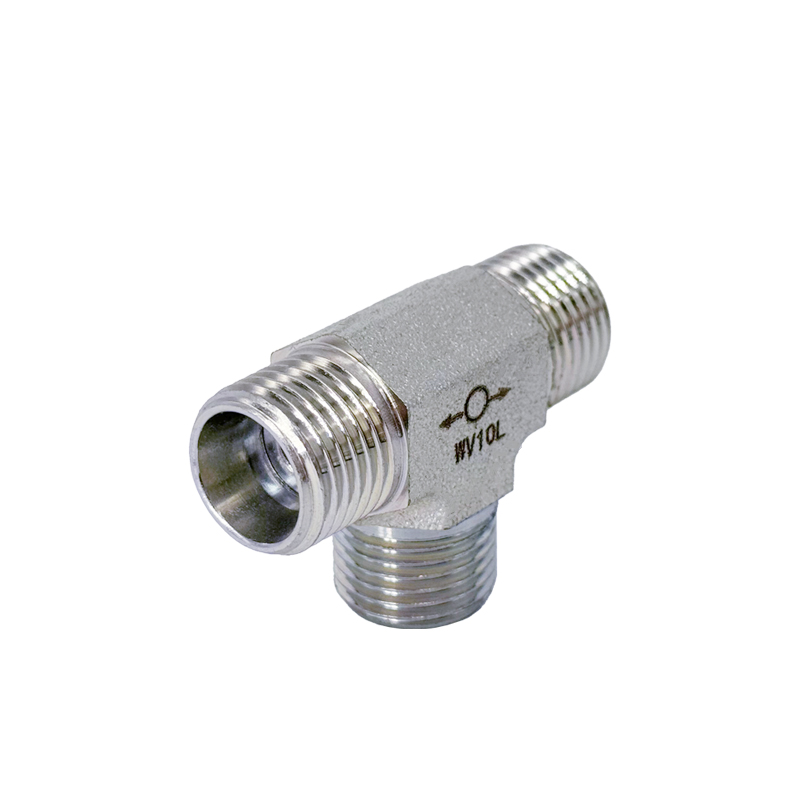
Actuation relies entirely on pressure gaps between sources. You must assess the minimum differential pressure needed to trigger a complete shift. High-end models actuate at extremely low differentials, often between 1–2 PSID. Failing to match this metric to your actual system realities causes severe trouble. It frequently results in a stuck shuttle valve during gradual pressure losses. Engineers must calculate the worst-case scenario pressure drops accurately.
Housing and sealing materials must survive harsh fluid environments. Evaluate elastomers like Buna or Polyurethane carefully against your system fluids. Mixed-media capabilities are absolutely crucial in specialized setups. Emergency lines sometimes use a different fluid or gas than primary circuits. Your chosen valve materials must resist chemical degradation from both distinct sources. Compatibility prevents premature seal swelling or cracking.
Standard rubber O-rings wear out quickly. High-pressure cycling causes catastrophic blowout failures. Integrated nose seals offer a vastly superior alternative for high-stress applications. Advanced polymer seating provides critical leak-free compliance. Always compare these internal architectures before finalizing a system design. A robust seal prevents cross-contamination between fluid reservoirs.
Physical mounting space is often severely limited. You must balance the required flow rate, known as the Cv factor, against strict spatial constraints. Aerospace manifolds demand extreme compactness. Mobile off-highway vehicles share this strict footprint requirement. Do not sacrifice necessary flow dynamics for a smaller exterior dimension. Restricted flow generates excess heat and sluggish system response times.
Best Practices for Specification
Always calculate the Delta-P based on the furthest possible leak point in the system.
Request material compatibility charts if primary and backup media differ (e.g., hydraulic oil vs. compressed nitrogen).
Avoid specifying standard O-rings if the system experiences rapid, high-frequency pressure spikes.
Verify the Cv factor across the entire anticipated operating temperature range.
Not all pipeline ruptures happen violently. A distant, gradual leak presents a major engineering pitfall. The line pressure drops very slowly over several minutes. This pressure difference might remain too small to forcefully shift the internal mechanism. Consequently, the system fails to isolate the ruptured line. You must account for these low-flow failure modes during the initial schematic design phase.
Mechanical wear happens predictably over time. If the internal component fails to seat perfectly, high-pressure fluid bleeds across the gap. It enters the low-pressure source entirely undetected. This internal leakage causes hydraulic tank overflows. It also accelerates secondary pump degradation due to unintended back-pressure. Routine flow testing prevents these unexpected maintenance disasters.
Hydraulic fluid often carries microscopic debris. Hard particulate matter can easily score the delicate valve seat. A tiny mechanical scratch permanently compromises a bubble-tight seal. Inline filtration serves as a mandatory companion for these sensitive components. Never install precise mechanical flow controls without utilizing high-quality upstream filters. Clean fluid extends component lifespan exponentially.
Common Issues and Troubleshooting Matrix
Observed Symptom | Probable Root Cause | Recommended Solution |
|---|---|---|
Valve fails to shift during primary loss | Insufficient differential pressure (Delta-P) | Replace with a highly sensitive, low-differential model (1-2 PSID). |
Fluid overflowing into backup tank | Internal bypass leakage (scored seat) | Inspect internal seating; upgrade to polymeric seals and add inline filtration. |
Sluggish actuation speed | Fluid viscosity mismatch or binding | Verify operating temperature ranges; flush system to remove varnish buildup. |
Premature backup line engagement | System pressure surges or spikes | Switch to a spring-biased design to introduce a specific actuation threshold. |
The operational purpose of this component extends far beyond simple fluid routing. It functions as a critical failsafe that dictates overall system resilience. Engineers must move away from commoditized purchasing habits. Treat this specification process as a key risk-management decision. Review your current hydraulic and pneumatic schematics today. Consult with a specialized valve manufacturer to eliminate unrecognized single points of failure before they compromise your equipment.
A: They serve similar fluid control functions but operate differently. A shuttle valve actively selects between two fluid inputs to feed one output based on pressure differences. A double check valve typically manages flow direction restrictions within a single line context. It prevents reverse flow rather than actively choosing between redundant sources.
A: Yes. While the mechanical operating principle remains identical, you must match specific components to the media. Material seating, internal tolerances, and pressure ratings change drastically. Pneumatic applications require specialized "bubble-tight" polymer seats to prevent gas leaks, whereas hydraulic systems typically handle higher overall system pressures and lubrication levels.
A: Several factors cause this failure. The most common is an insufficient differential pressure (Delta-P) needed to actuate the internal mechanism. Other common culprits include mechanical binding caused by fluid contamination or a heavily worn internal spring/detent mechanism holding the spool in place.


