Please Choose Your Language
Views: 0 Author: Site Editor Publish Time: 2025-08-20 Origin: Site


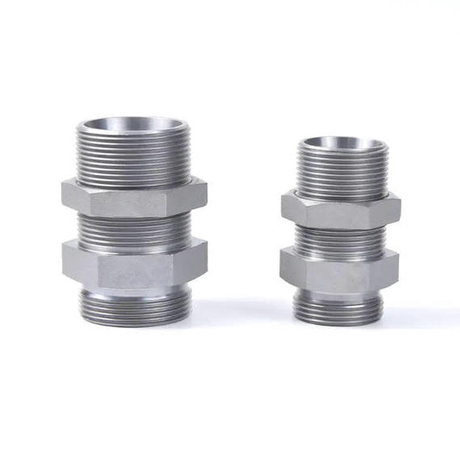
A straight bulkhead fitting is commonly used to connect hydraulic pipes or tubes through a panel, wall, or mounting surface. It provides a practical way to route fluid lines while maintaining a secure connection on both sides of the bulkhead.
But what types of pipes are straight bulkhead fittings mainly suitable for connecting?
The answer depends on the fitting design, connection type, pipe dimensions, material, pressure requirements, and sealing method.
A straight bulkhead fitting is a hydraulic fitting designed for installation through a panel or bulkhead. It normally has connection ends on both sides, allowing hydraulic tubing or piping to pass through a fixed mounting surface.
This design is useful where the hydraulic line needs to pass through equipment panels, machine frames, cabinets, or other structural barriers.
Straight bulkhead fittings are commonly used with hydraulic tubes that match the fitting's connection and size requirements.
Depending on the fitting design, metric or other standardized connection systems may be used. The tube dimensions and connection type should be checked before installation to ensure proper compatibility.
Steel hydraulic tubing is another common application. It is suitable for many hydraulic systems where mechanical strength and reliable fluid transmission are required.
When using steel tubes, the tube size, material, connection method, and working pressure should be matched with the bulkhead fitting.
Some hydraulic fitting systems use specially prepared tube ends or standardized sealing surfaces. For example, fittings with a 24° cone connection are designed to work with the corresponding tube and connection components.
The tube end and fitting must be compatible to achieve the intended sealing performance.
Choosing a suitable straight bulkhead fitting is not only about the pipe material. Several factors should be checked.
The tube or pipe size must match the fitting. The connection standard and thread type should also be confirmed before installation.
The fitting and connected pipe should be suitable for the system's working pressure. For high-pressure hydraulic applications, the complete connection should be evaluated rather than considering the fitting alone.
Different hydraulic fittings use different sealing designs. The pipe end, fitting, and sealing surface should be compatible to help prevent leakage.
Because a bulkhead fitting passes through a panel or structural surface, the available installation space and panel thickness should also be considered.
Straight bulkhead fittings can be used in various hydraulic and industrial systems, including:
Hydraulic machinery
Construction equipment
Agricultural machinery
Industrial equipment
Mobile hydraulic systems
Hydraulic control systems
Fluid transmission systems
They are particularly useful when hydraulic lines need to pass through equipment panels or structural sections while maintaining a reliable connection.
Straight bulkhead fittings are practical components for connecting hydraulic tubes and pipes through panels, walls, or machine structures. They can be used with suitable steel tubes, hydraulic tubing, and other compatible pipe connections.
When selecting a straight bulkhead fitting, pipe size, connection type, working pressure, sealing method, material, and installation space should all be considered.
Choosing a fitting that matches the complete hydraulic connection can help improve sealing reliability and provide a suitable solution for hydraulic and industrial piping systems.