Please Choose Your Language
Views: 0 Author: Site Editor Publish Time: 2026-04-20 Origin: Site


Managing dual water sources or complex fertigation systems requires fail-safe fluid logic. Relying heavily on intricate electronic manifolds for redundancy often introduces unnecessary points of failure. Electronic components routinely fail under harsh agricultural conditions. When an irrigation setup must seamlessly switch between a primary and backup water supply, you face a serious engineering challenge. Managing multi-source chemical injections without cross-contamination also demands absolute precision. In these scenarios, passive hydraulic control proves much more reliable than automated solenoids. You need a mechanical safeguard immune to power outages and software glitches. Understanding how these valves integrate into an irrigation framework allows system architects and agricultural engineers to build truly redundant, fault-tolerant networks.
A shuttle valve operates as a hydraulic "OR gate," automatically selecting the higher-pressure fluid source without requiring electronic 24VAC signals.
Integrating a 3 way shuttle valve eliminates the need for complex double-check valve manifolds in redundant water supply designs.
While highly reliable, successful implementation requires precise calculation of pressure differentials to prevent shuttle stalling and internal leakage.
Long-term ROI is driven by the prevention of crop-loss downtime and the reduction of active electrical components in harsh agricultural environments.
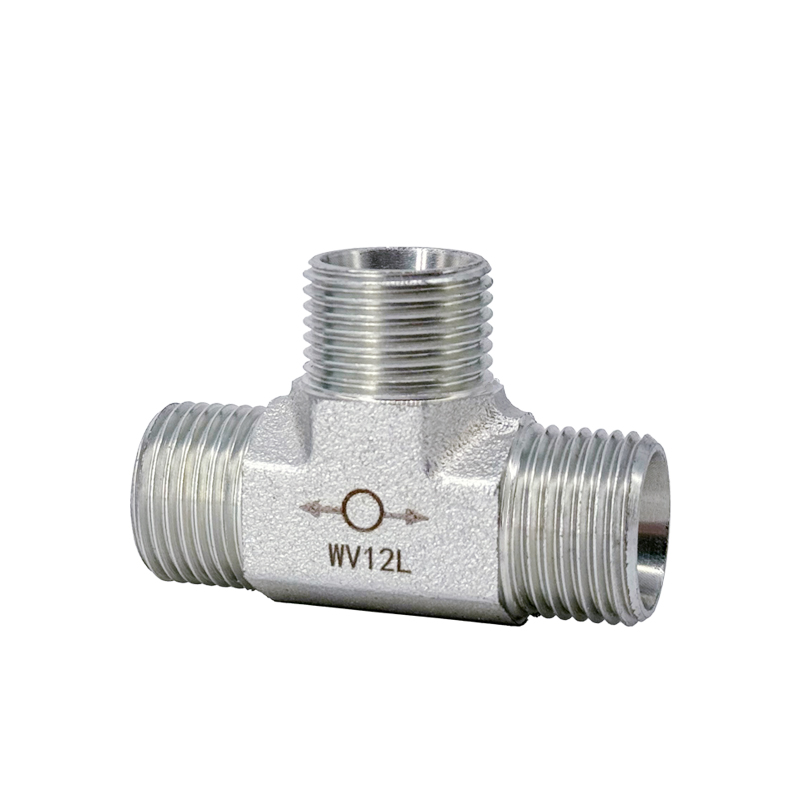
In the realm of fluid dynamics, we often borrow concepts from digital logic. A shuttle valve acts exactly like an "OR gate" in a computer circuit. It accepts fluid from one source or another, but never both simultaneously. The component functions fundamentally as a double check valve. However, it features only a single moving part. This internal moving piece is usually a small ball or a machined shuttle spool. The valve body contains two distinct inlet ports. Engineers connect these inlets to different water lines or pilot air sources. The body also features one common outlet port. This simple geometry creates a highly effective fluid logic gateway. You achieve maximum reliability because fewer moving parts mean fewer mechanical failures.
Most commercial irrigation systems rely heavily on solenoid valves. Solenoids require 24VAC electrical signals to lift internal diaphragms. Electric systems introduce vulnerabilities. Power grids fail. Wires corrode in wet soil. Lightning strikes destroy controllers. A passive hydraulic valve bypasses all these electrical risks. It reacts purely to physical fluid dynamics.
Here is exactly how the actuation process unfolds:
You apply water pressure to Inlet A (the primary source).
The incoming water physically pushes the internal shuttle across the chamber.
The shuttle slams against the machined seat of Inlet B (the backup source).
This action tightly seals off the backup line.
Water flows freely from Inlet A out through the common outlet.
Consider a failover scenario. Imagine Source A suddenly loses pressure due to a pump failure. The pressure balance inside the chamber instantly changes. Source B now holds the higher pressure. This fluid force pushes the shuttle to the opposite side. It seals off the dead primary line. Source B instantly takes over the supply. The system requires zero manual intervention. No computers process the switch. It happens seamlessly in milliseconds.
Commercial farms cannot survive extended droughts or municipal water main breaks. Large-scale operators often design "hot standby" redundant systems. They connect a municipal water supply to one inlet. They connect an on-site well or rainwater reservoir to the second inlet. The primary line usually operates at a higher pressure. If the city water pressure drops dangerously low, the system reacts immediately. The well pump pressure forces the internal mechanism to shift. The irrigation cycle continues uninterrupted. Plants never experience drought stress.
Modern agriculture relies on precise chemical injections. Growers inject liquid fertilizers, acids, and pesticides directly into the main irrigation header. Managing multiple nutrient lines requires strict safety protocols. You must ensure higher-pressure lines do not backflow into lower-pressure chemical tanks. A sudden backflow event contaminates expensive fertilizer batches. It also creates dangerous chemical reactions. Passive hydraulic routing isolates these injection lines safely. The valve only permits the active, high-pressure chemical to enter the manifold. It locks out the inactive lines.
Massive agricultural operations often utilize heavy-duty, pneumatically actuated main valves. These large mainlines require compressed air pilot lines to open and close. Sometimes, operators need multiple control locations. They might want a manual pneumatic switch in the field and an automated switch in the pump house. By installing this valve, multiple pilot control lines can actuate a single heavy-duty irrigation valve. The air signal simply travels through the active port, blocking the inactive port, and shifting the massive mainline valve.
Application Type | Primary Use Case | Key Benefit |
|---|---|---|
Water Redundancy | Switching between city water and a backup well. | Prevents crop loss during municipal pressure drops. |
Fertigation Safety | Isolating multiple chemical injection lines. | Stops dangerous cross-contamination in tanks. |
Pneumatic Control | Routing pilot air to large master valves. | Enables multi-point control without electrical relays. |
Choosing the correct housing material dictates the lifespan of your installation. You must match the material to the fluid type. Standard agricultural water allows for economical choices. Heavy-duty PVC or Nylon bodies resist mineral scaling beautifully. They offer a cost-effective solution for standard field water. However, fertigation introduces aggressive corrosive agents. Liquid fertilizers and pH-adjusting acids will quickly destroy standard PVC components. For chemical applications, you must specify Brass or Stainless Steel components. Additionally, you need specialized internal seals. Standard Buna-N rubber degrades in acid. Ensure the manufacturer uses PTFE (Teflon) or Viton seals for chemical longevity.
Engineers often consider pressure differential the most critical evaluation metric. The valve relies entirely on unbalanced pressure to move the internal mechanism. If the pressure difference between the two sources is too low, you face severe problems. The 3 way shuttle valve might stall in the middle of the chamber. A stalled mechanism fails to seal either port fully. This causes continuous cross-line leakage. Your specification must ensure the backup source has sufficient PSI to firmly seat the component during a failover event. Generally, experts recommend a minimum pressure differential of 10 to 15 PSI to guarantee a watertight seal.
You cannot simply guess the correct pipe thread size. You must match the valve's Cv (flow coefficient) to your irrigation mainline. The Cv rating indicates how much water can pass through the body at a specific pressure drop. If you install an undersized unit, you create a severe restrictive bottleneck. The water velocity increases, creating friction. This results in an excessive pressure drop downstream. Your zone rotors will struggle to pop up. Drip lines will fail to emit the correct gallons per hour. Always calculate the maximum required flow rate before finalizing your specification.
Material Selection Chart
Material | Best Fluid Application | Cost Profile | Durability Notes |
|---|---|---|---|
Heavy-Duty PVC | Standard well or city water | Low | Highly resistant to calcium scaling; brittle under extreme UV. |
Brass | High-pressure water / Mild nutrients | Medium | Excellent thread strength; susceptible to acidic corrosion. |
Stainless Steel (316) | Aggressive acids / Liquid fertilizers | High | Ultimate chemical resistance; requires Viton/PTFE seals. |
Even the most robust mechanical systems experience occasional faults. The most common failure mode is a "stuck open" or stalled internal mechanism. The primary symptom is water bleeding back into the secondary source line. When you notice a backup tank overflowing, you likely have a seating issue. The cause rarely involves catastrophic mechanical breakage. Instead, micro-debris usually drives the failure. Sand, silt, or hard mineral buildup enters the chamber. A single grain of coarse sand prevents the ball from seating fully against the rubber O-ring. Alternatively, as discussed earlier, an insufficient pressure differential fails to push the ball hard enough to crush the debris.
You cannot install passive hydraulic controls in dirty water environments without protection. The valve requires dedicated upstream filtration. Physical debris is the absolute primary cause of mechanical failure in these systems. You must install reliable filters on both inlet supply lines.
Y-Strainers: Excellent for capturing large organic matter and coarse sand.
Disc Filters: Ideal for trapping fine silt and algae that bypass mesh screens.
Routine Flushing: Ensure your filtration setup includes flush valves to easily clear trapped particulate matter.
Farm technicians despise digging up underground PVC pipe manifolds. Cutting and re-gluing pipes wastes hours of valuable labor. You can avoid this by purchasing smartly designed hardware. Select valve designs that feature a threaded top bonnet. This engineering choice permits the "Inner Replacement" method. If a valve fails, you simply shut off the water pressure. You unscrew the top bonnet using a standard wrench. You flush the chamber with clean water. Finally, you drop in a brand-new internal shuttle and fresh O-rings. You screw the bonnet back on. The entire repair takes five minutes. You never touch a PVC saw or toxic pipe glue.
Installing the valve backward against the designated flow arrows.
Using liquid thread sealant (pipe dope) instead of Teflon tape, which can enter the chamber and glue the moving parts together.
Failing to account for the static head pressure of an elevated backup tank.
The integration of this specialized valve into an irrigation system offers a highly elegant, mechanically simple solution. It fundamentally streamlines how engineers manage multiple water or chemical sources. By relying on basic fluid physics instead of fragile electronics, you eliminate massive points of failure within agricultural networks.
For system architects prioritizing reliability and reduced electrical complexity, specifying the correct passive hydraulic controls based on exact pressure differentials is a foundational step. You build truly resilient agricultural infrastructure by trusting mechanical logic.
Evaluate your system's primary and secondary pressure metrics immediately. Choose your valve body material and flow capacity based on your harshest chemical inputs. Consult with a certified hydraulic specialist to verify your filtration setup is adequate before integrating any passive valves into your mainline.
A: No. A shuttle valve determines which water source feeds the system based on pressure, while a solenoid valve determines when the water flows based on electrical timer signals. They are often used together in complex systems to achieve both source redundancy and precise scheduling.
A: This usually occurs when the pressure difference between the two supply lines is too small to fully force the shuttle against one side. It can also happen when physical debris, like sand or mineral scale, is trapped against the internal valve seat, preventing a watertight seal.
A: In most configurations, the shuttle valve acts as a double check valve inherently. However, local municipal codes may still require dedicated backflow preventers (like an RPZ) on city water lines to guarantee zero contamination back into the public drinking supply.