

Please Choose Your Language
Views: 0 Author: Site Editor Publish Time: 2026-04-24 Origin: Site


In fluid power logic, engineers often need a simple yet highly reliable "OR gate." The shuttle valve serves exactly this role. It provides critical system redundancy, safety fallbacks, and multi-point control across countless industrial applications. Specifying the wrong component carries severe operational risks. If you choose an improper design, you face immediate threats like internal leakage or sluggish response times. In high-stakes hydraulic or pneumatic circuits, these failures easily compromise machinery safety and halt production lines. We must move past basic mechanical theory to solve these issues. This guide offers a practical, engineering-focused framework. We will help you evaluate, specify, and source the right component for your specific industrial applications. You will learn how to balance pressure differentials, material constraints, and internal geometry. Our ultimate goal is to ensure your final system operates flawlessly under all routine and emergency conditions.
Shuttle valves operate on a pressure-differential mechanism, automatically isolating the lower-pressure inlet to allow flow from the higher-pressure source.
The classic 3 way shuttle valve is the industry standard for fail-safe redundancy, particularly in winch brakes and backup compressor circuits.
Material selection and internal sealing mechanisms dictate Total Cost of Ownership (TCO) by determining contamination resistance and leak tolerance.
System designers must weigh the trade-offs between rapid shifting capabilities and the risk of spool binding in unfiltered environments.
To master fluid power design, you must understand the underlying physics of circuit control. These components function as mechanical logic gates. They rely entirely on fluid dynamics rather than electrical signals.
In electronic control systems, an OR gate outputs a signal if either input receives power. Fluid power systems replicate this concept mechanically. Fluid enters from one of two distinct sources. The system measures the pressure difference natively. The higher pressure physically moves an internal barrier across the valve body. This barrier then seals the opposite inlet tightly. Fluid subsequently flows out through a single shared outlet. This automatic physical logic prevents backflow into the inactive line.
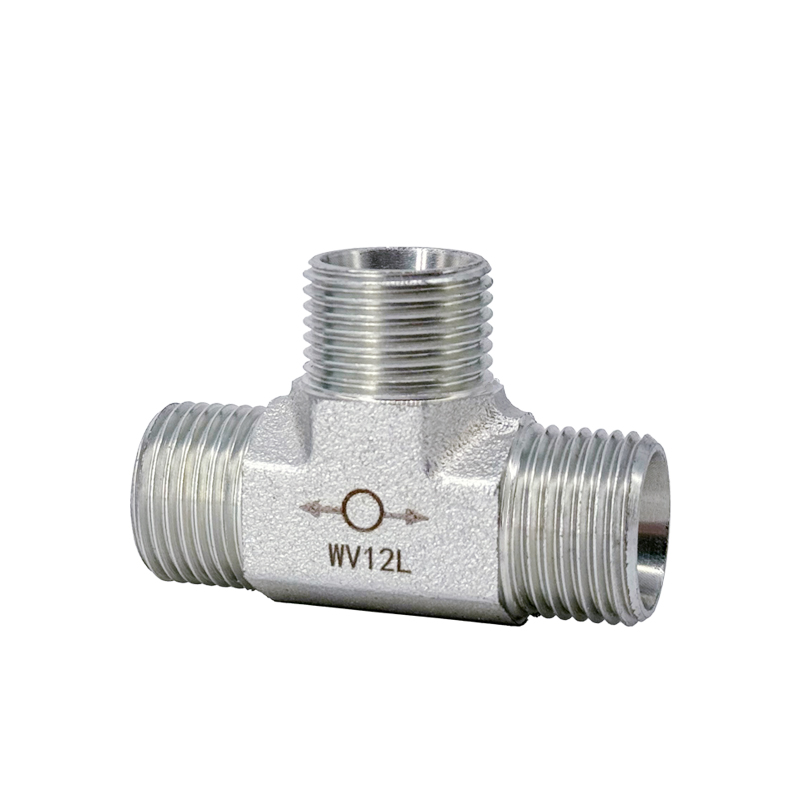
The industry relies heavily on standard configurations to maintain safety and predictability. A standard 3 way shuttle valve features a highly specific structural anatomy. Every port serves a non-negotiable role in the safety circuit.
Normal Inlet: This port connects to the primary fluid or air source. It handles the continuous flow during standard daily operations.
Alternate/Emergency Inlet: This secondary port remains dormant under normal conditions. It takes over instantly upon primary pump or compressor failure.
Outlet: This is the single discharge point. It directs the selected fluid straight to the actuator, sub-circuit, or braking mechanism.
These units rely entirely on the internal pressure gradient to shift. The physics demand a distinct difference between the two inlet pressures. Implementation reality often reveals hidden challenges. Insufficient pressure drops fail to push the internal barrier across the chamber. Long-distance micro-leaks bleed off crucial force. These leaks can result in a failure to fully seat the internal shuttle. When the barrier hovers in the middle, fluid bypasses the seals. System designers must map the exact pressure drop expected at the valve entry point.
No single design satisfies all engineering requirements. You must match the internal geometry and media compatibility to your specific application. Using a pneumatic design in a hydraulic circuit invites catastrophic failure.
Fluid properties dictate the internal construction of the valve body.
Pneumatic configurations handle compressed air. Engineers optimize them for air pilot control and pneumatic logic circuits. They focus on rapid shifting speeds. Maintaining constant outlet pressure is the primary goal. Air compresses easily, so the internal barrier must react instantly to minor pressure variations.
Hydraulic configurations handle dense, uncompressible fluids. Manufacturers build them for extreme high-pressure redundancy. You will frequently see them in load-sensing circuits for heavy machinery. They require robust internal sealing mechanisms. Heavy fluid crossover between ports destroys system efficiency. Hydraulic variants utilize heavier materials to withstand immense mechanical stress.
The return mechanism determines how the system reacts when pressure equalizes or drops to zero.
Spring-Centered: Internal springs force the barrier back to a neutral, middle position when fluid pressure drops. We specify these for specific fail-safe requirements where you need an open or blocked center state upon power loss.
Non-Spring-Centered: This design maintains its last shifted position indefinitely. It stays locked in place until the opposite inlet applies a superior counter-pressure. This creates a physical memory state within the circuit logic.
Physical space constraints dictate the exterior housing design. Standard inline models feature threaded ports. Installers place them directly into rigid piping or flexible hose lines. Manifold-mounted cartridge designs offer a sleeker alternative. Engineers embed cartridge models directly into machined aluminum or steel blocks. This eliminates external piping completely. Cartridge designs perfectly suit space-constrained block assemblies on mobile equipment.
Feature | Pneumatic Systems | Hydraulic Systems |
|---|---|---|
Primary Media | Compressed air, inert gases | Mineral oil, synthetic fluids |
Operating Pressure | Low to medium (up to 150 psi) | Very high (up to 5000+ psi) |
Design Priority | Rapid shift speed, lightweight | Zero leakage, burst resistance |
Typical Use Case | Logic gates, pilot signals | Load sensing, winch brakes |
Procurement teams often look only at the initial purchase price. Experienced engineers evaluate the Total Cost of Ownership (TCO). Material selection drives lifespan, maintenance intervals, and replacement costs.
The external housing protects the internal logic from environmental damage and burst pressures.
Brass and aluminum represent the industry standard for lightweight applications. They are highly cost-effective. You should specify them for standard indoor pneumatic applications. Aluminum sheds heat quickly, while brass resists mild corrosion.
Stainless steel commands a much higher upfront cost. However, it delivers a significantly lower TCO in aggressive environments. Corrosive atmospheres destroy aluminum. Sub-sea hot standby systems require 316-grade stainless steel to survive saltwater exposure. Extreme hydraulic pressures also demand steel to prevent catastrophic body ruptures.
The moving internal barrier takes two primary forms. Each carries unique mechanical traits.
Steel balls offer incredible durability. They feature a simple, foolproof geometry. They resist wear and handle particulate matter better than complex shapes. However, they can vibrate at certain flow rates.
Precision-machined cylindrical spools provide superior flow characteristics. They glide smoothly within the bore. Spools allow larger fluid volumes to pass quickly. Unfortunately, spools bind easily. If dirt enters the system, a spool will jam against the bore wall.
Seals dictate the internal leak rate. You must match the seal chemistry to the fluid.
Elastomers like Nitrile (Buna-N) and Viton provide excellent drop-tight sealing. Nitrile works perfectly for standard mineral oils and ambient temperatures. Viton handles aggressive synthetic fluids and elevated temperatures. Elastomers degrade over time and require eventual replacement.
Metal-to-metal sealing eliminates rubber entirely. Hardened steel seats against hardened steel. We use this method for extreme temperature extremes or aggressive chemicals. Note that metal-to-metal seals rarely achieve zero-leakage. They permit slight fluid weeping by design. Sealing integrity directly impacts maintenance frequency.
Every fluid logic component carries inherent strengths and weaknesses. You must design mitigating strategies around known vulnerabilities to ensure long-term reliability.
These units require absolutely no external electronic actuation. Solenoids burn out. Wiring harnesses snap. Software crashes. This mechanical logic operates purely on fluid physics. It remains highly resilient in total power-loss scenarios. When the main power fails, the backup accumulator simply pushes the barrier over automatically.
Modern circuitry demands compact solutions. The simplified design allows direct integration into actuator ports. You can thread the unit straight into a cylinder. This eliminates redundant pipework, reduces leak points, and shrinks the overall machine footprint.
Debris ruins fluid systems. Contamination remains the leading cause of internal binding. Dirt, metal shavings, or degraded seal fragments can cause the shuttle to stick mid-stroke. When it sticks, fluid bypasses the logic gate completely.
Mitigation Strategy: Implement mandatory upstream filtration requirements. Adhere to strict ISO 4406 fluid cleanliness codes. Install high-quality pressure filters before the inlets to trap particulates before they reach the logic gate.
Seals eventually wear down. High cycle rates accelerate this degradation. When seals fail, fluid bleeds past the barrier. This creates cross-contamination between the two independent inlet circuits. A leak here can depressurize an emergency accumulator.
Mitigation Strategy: Specify valves utilizing zero-leakage poppet designs for highly sensitive applications. Schedule routine pressure decay testing to monitor seal health over the operational lifespan.
Moving from theoretical design to actual purchasing requires strict evaluation criteria. You must translate your system requirements into tangible vendor specifications.
Never guess the port size. You must calculate acceptable pressure drops (ΔP) across the expected flow range. Flow coefficient (Cv) metrics dictate how much fluid the geometry allows through. If you undersize the unit, you create a massive bottleneck. System starvation occurs. Actuators will move erratically or fail to generate required force. Oversizing wastes money and increases response time.
Cracking pressure defines the exact differential force required to unseat the barrier. Ensuring the selected valve is sensitive enough remains critical. If your backup system generates a 5 psi differential, a valve requiring 10 psi to crack will never shift. Match the cracking pressure exactly to your system's specific differential pressure profile.
Hold your suppliers accountable. Use this checklist during the procurement phase:
Transparent Data: Do they provide comprehensive flow versus pressure drop charts? Avoid vendors relying on single-point flow estimates.
Customization: Are custom cracking pressures available upon request? Can they supply hybrid materials for unusual chemical mixtures?
Standardization: Does the product prove compliance with relevant ISO fluid power standards (e.g., ISO 1219)?
Traceability: Can they provide material test reports (MTRs) for extreme applications?
Guide your final decision by mapping your primary pain point directly to the specification sheet. Do not chase generic features. Identify your biggest risk. Is your priority absolute leak prevention? Focus on poppet designs and Viton seals. Do you need rapid response times? Look for lightweight aluminum spools and low cracking pressures. Is chemical resistance your main concern? Filter your search exclusively for 316 stainless steel bodies.
Understanding how the internal mechanism works is only your baseline. A functional OR gate concept means nothing if the hardware fails under pressure. True engineering success lies in aligning its specific pressure thresholds, metallic materials, and internal geometry with the exact demands of your circuit.
Actionable Next Steps:
Calculate your maximum acceptable pressure drop before browsing catalogs.
Audit your existing upstream filtration to ensure it meets cleanliness requirements.
Map your exact failure scenarios to determine if you need spring-centered logic.
Evaluate all fluid chemical properties against elastomer compatibility charts.
Do not finalize your bill of materials blindly. We strongly encourage you to consult directly with applications engineering teams. Request technical CAD models to verify physical clearances. Review specific product data sheets rigorously to validate your system design before issuing purchase orders.
A: They operate on similar pressure-differential principles, but their fundamental logic differs. A shuttle valve actively selects between two competing fluid sources to feed one shared outlet. It acts as an OR gate. Standard double check valves simply prevent reverse flow in a single, straight-line circuit. They do not manage secondary backup sources.
A: No. You cannot use them for mixing. Engineers design them strictly for circuit isolation and directional control. The internal barrier physically blocks one inlet while opening the other. They never allow both inlets to flow simultaneously. You need proportional mixing valves for blending applications.
A: Incomplete shifting usually stems from three issues. First, the pressure differential may be too low to overcome internal friction. Second, fluid contamination might be binding the spool against the bore. Third, internal seals may have degraded, allowing fluid bypass. Always verify your upstream filtration and check for adequate pressure gradients.

