

Please Choose Your Language
Views: 0 Author: Site Editor Publish Time: 2026-06-12 Origin: Site


Hydraulic hose failures carry incredibly high stakes on any job site. Sudden line ruptures cause catastrophic load drops, severe equipment damage, and immediate safety hazards for nearby operators. To combat these dangers, a hose burst valve—often called a velocity fuse—acts as a vital mechanical fail-safe. Safety inspectors and engineers mandate these components to meet strict compliance requirements across modern heavy machinery. Without them, suspended loads become lethal hazards the moment fluid pressure vanishes.
You must understand both internal valve mechanics and broader system parameters to protect your assets. This guide bridges the gap between basic valve functions and informed, system-specific procurement decisions. You will learn exactly how these devices lock loads, how to prevent nuisance tripping, and what evaluation criteria matter most during selection.
Mechanics: Hose burst valves utilize a pre-calibrated spring and poppet system that snaps shut when flow velocity exceeds a safe threshold, locking the load in place.
System Integrity: Direct-to-cylinder mounting is non-negotiable; inline mounting leaves the system vulnerable to post-valve ruptures.
Sizing Risks: Oversizing delays activation during a burst; undersizing causes nuisance tripping during normal, high-demand operations.
Evaluation Criteria: Procurement must balance flow rating (e.g., 25L/min vs. high-flow), pressure drop tolerances, and material traceability to meet ISO/CE safety standards.
To spec the right components, you first need to visualize the internal physics at play. A hose burst valve relies on a simple yet highly reliable mechanical balance between fluid velocity and spring tension. Here is the operational sequence broken down into four distinct phases.
The Normal State (Unrestricted Flow): During standard machine operation, hydraulic fluid passes freely through a preset orifice gap within the valve cartridge. A small, predictable baseline pressure differential exists across this gap. The internal spring holds the poppet open, allowing normal extension and retraction of the hydraulic cylinder.
The Rupture Event (Flow Surge): When a hydraulic line fails catastrophically, backpressure drops to zero almost instantly. The weight of the suspended load forces fluid out of the cylinder at an extreme velocity. This sudden flow surge alters the fluid dynamics dramatically.
The Actuation (Locking the Load): Because fluid is now rushing out faster than the normal flow rate, the pressure differential across the valve spikes. This differential force overpowers the internal spring tension. The poppet snaps against the valve seat, instantly blocking reverse flow and locking the hydraulic cylinder—and its load—safely in place.
Resetting the System: Actuation is an emergency response. Once triggered, the load remains locked until maintenance crews repair the ruptured hose. To reset the valve, operators must equalize the pressure. They achieve this either by slowly pumping fluid back into the repaired line (often utilizing a tiny internal bleed hole) or by manually actuating an external release mechanism.
Best Practice: Always verify your system's exact baseline flow before selecting a cartridge. A mismatch here guarantees operational headaches down the line.
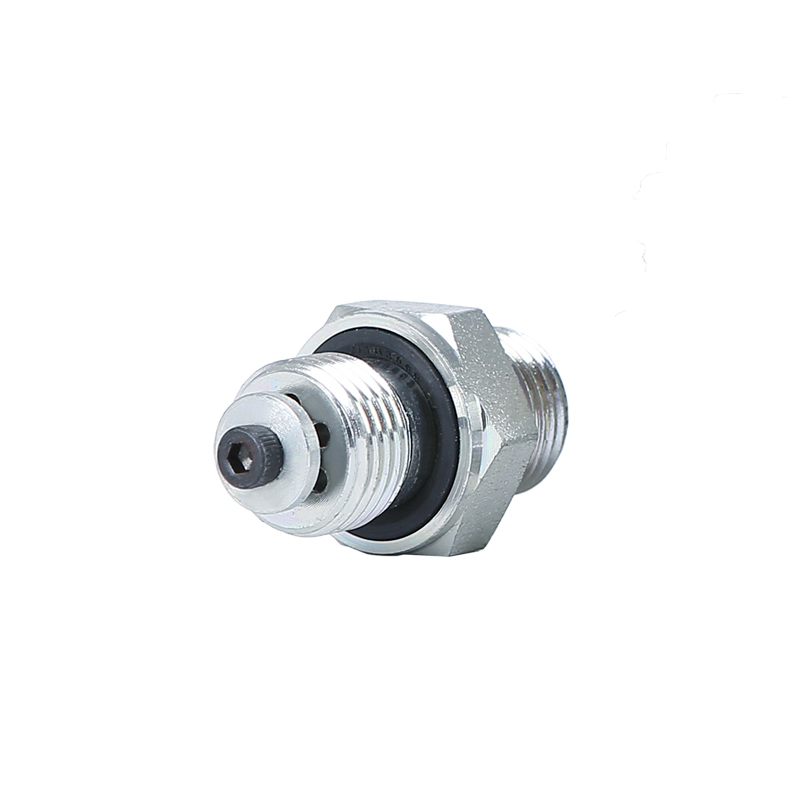
Treating these safety devices as mere checklist items invites disaster. When poor-quality valves fail to deploy, the operational and financial fallout hits hard. Implementing a reliable hose burst valve in hydraulic systems protects your bottom line just as much as it protects your operators.
Consider the direct costs of failure. An absent or jammed valve leads directly to totaled assets. A falling excavator boom or a dropped aerial lift platform destroys whatever sits underneath. You then face extensive unplanned downtime while replacing damaged machinery. Furthermore, high-pressure fluid spills require expensive environmental remediation and cleanup efforts.
Beyond asset damage, personnel safety and legal compliance remain paramount. Regulatory bodies do not accept excuses. Authorities mandate these specific fail-safes to meet stringent workplace safety standards. For instance, the ISO 8643 standard strictly dictates load-lowering control parameters for hydraulic excavators. European CE marking and American OSHA guidelines enforce similar requirements for aerial work platforms and telehandlers. Skipping this component invites severe legal liability.
However, we must separate fear-based marketing from engineering reality. A velocity fuse only mitigates the sudden drop. It does absolutely nothing to prevent the actual hose rupture. Hoses will eventually degrade from UV exposure, abrasion, and pressure spikes. You must still enforce rigorous preventative maintenance and regular visual inspections of all hydraulic lines.
Correct sizing separates a smoothly functioning machine from one plagued by constant false triggers. Engineers must carefully evaluate flow ratings, pressure drops, and cartridge types.
The golden engineering rule dictates setting the closing flow rate approximately 20% to 30% higher than the maximum normal system return flow. This buffer prevents premature actuation. If your cylinder returns fluid at 50 liters per minute under heavy load, setting the trigger exactly at 50 liters guarantees the valve will snap shut during normal operation. You must allow room for operational spikes.
Chart: Recommended Trigger Point Calculation Chart
Normal Max System Flow (L/min) | +20% Minimum Trigger (L/min) | +30% Maximum Trigger (L/min) | Recommended Action |
|---|---|---|---|
25 | 30 | 32.5 | Use standard low-flow cartridge |
50 | 60 | 65 | Use medium-flow cartridge |
100 | 120 | 130 | Use high-flow cartridge, monitor Δp |
150+ | 180 | 195 | Custom sizing required, check heat load |
You also need to address high-variance flow demands. Some systems handle a baseline of 25L/min but require brief surge capacities without tripping. In these cases, you must analyze the pressure drop (Δp) considerations listed on manufacturer specification sheets. Restrictive valve geometries force fluid through tight spaces, creating high pressure drops. This friction generates unwanted heat and drastically reduces system efficiency. Look for optimized, streamlined flow geometries to keep temperatures down.
Finally, engineers must choose between adjustable and pre-set cartridges. Factory-set, tamper-proof valves offer superior long-term reliability. The manufacturer calibrates them accurately on a bench, meaning field operators cannot accidentally alter the settings. Field-adjustable valves offer flexibility for custom machinery, but they introduce a significant human-error risk. An inexperienced technician might adjust the spring tension incorrectly, rendering the safety mechanism useless during an actual burst.
A perfectly specified valve becomes useless if installed incorrectly. Mounting architecture dictates system safety. You must screw the valve directly into the actuating cylinder port. Do not use hoses or extended pipe fittings between the cylinder and the valve. If you rely on inline mounting further down the hydraulic circuit, you leave the system completely vulnerable. A hose rupture occurring between the cylinder and the remotely mounted valve means the fluid escapes before ever reaching the safety mechanism, causing the load to plummet.
In the field, operators frequently battle the "nuisance tripping" problem. This occurs when the valve falsely detects a line break and locks the load during routine tasks. Agricultural and mobile hydraulics frequently experience this. Cold weather presents a major culprit. Cold hydraulic fluid has higher viscosity. Thick oil creates more resistance as it pushes through the valve orifice. This higher pressure differential tricks the internal spring into closing early. Aggressive operator inputs—like violently throwing a control lever to lower a boom—can also cause instantaneous flow surges that trigger false lockouts.
Engineers must also clarify the integration boundaries between these velocity fuses and load holding valves. Consider the differences carefully.
Feature | Hose Burst Valves | Counterbalance Valves |
|---|---|---|
Primary Function | Emergency load locking during a catastrophic line failure. | Smooth load control and holding over-running loads. |
Actuation Method | Triggered by flow velocity (sudden surge). | Triggered by pilot pressure signals. |
Normal State | Open. Allows free flow until a surge occurs. | Closed. Blocks flow until pilot pressure opens it. |
Application Mandate | Safety compliance for unexpected drops. | Precision control for heavy lifting and lowering. |
Many circuits require both components to meet modern safety codes. Do not assume a counterbalance valve negates the need for proper line rupture protection, especially in CE-regulated markets.
Sourcing hydraulic components requires diligence beyond simply matching flow rates on a PDF. Manufacturing tolerances play a massive role in actual field safety. Evaluate the supplier's commitment to precision machining. When deployed, the internal poppet must seat perfectly against its mating surface. Poor seating leads to internal leakage. Even if the device deploys correctly during a rupture, internal leakage allows the heavy load to slowly drift downward, crushing whatever sits below.
Material choices and external coatings matter just as much. Hydraulic equipment often operates in brutal environments like marine docks, underground mines, and muddy agricultural fields. Standard steel components rust quickly. Assess corrosion resistance requirements actively. Specify zinc-nickel plating or similar high-grade surface treatments that offer 1000-hour salt spray resistance. Rust compromises the internal spring calibration and weakens external threads.
Finally, demand absolute traceability and testing documentation. Reliable manufacturers do not rely on batch sampling for safety critical items. They 100% bench-test every single unit for accurate cracking pressure and precise flow closure before shipment. Ask for these test certificates. If a supplier cannot provide ISO 9001 documentation or individual component test records, find another partner. Your workplace safety relies entirely on their quality control.
Understanding the internal mechanics of a velocity fuse represents only the first step in machinery safety. Correct integration, precise sizing, and rigorous supplier vetting actually save lives and protect expensive equipment. You cannot afford to treat these components as generic hardware.
To improve your operational safety immediately, take action on three fronts. First, audit your current hydraulic schematics to ensure all critical load-bearing cylinders feature direct-port mounting. Second, consult your machine's flow rate logs to establish an accurate baseline, thereby preventing frustrating nuisance tripping. Finally, engage directly with a qualified hydraulic components manufacturer to custom-spec your safety devices based on your specific pressure drop and environmental requirements.
A: Yes, if improperly sized, it introduces excessive restriction and pressure drop. Forcing hydraulic fluid through an undersized orifice creates friction, which immediately translates into heat generation. Always specify a component with optimized internal geometry to handle your maximum return flow.
A: This happens due to "nuisance tripping." Common causes include undersized valves, cold and thick hydraulic fluid increasing internal resistance, or sudden, aggressive manipulation of the main control valve. Ensure your trigger setting is 20% to 30% higher than your maximum normal flow.
A: Often, yes. Counterbalance valves manage over-running loads and provide smooth lowering control via pilot pressure. Velocity fuses act purely as emergency fail-safes for sudden line ruptures. Many safety mandates, like ISO 8643, require specific drop-mitigation hardware regardless of other installed control components.
A: First, safely secure the load and replace the ruptured hose. Then, you must re-pressurize the repaired hydraulic line slowly. This equalizes the fluid pressure across the internal poppet. Once pressure equalizes, the internal spring pushes the poppet back open, restoring normal operation.


