

Please Choose Your Language
Views: 0 Author: Site Editor Publish Time: 2026-06-13 Origin: Site


Catastrophic hydraulic hose failure leads to uncontrolled load drops. These sudden events present severe safety hazards and cause costly operational downtime. Engineers and maintenance teams need reliable components to mitigate these dangerous scenarios. A specialized safety device engineered to manage this exact risk is critical. A hose burst valve immediately locks fluid flow if a rupture occurs, successfully preventing the heavy load from collapsing.
However, selecting the right valve goes far beyond merely matching thread sizes. Buyers must carefully evaluate pressure drops, system flow dynamics, and specific architectural formats like inline or cartridge designs. Doing so ensures regulatory compliance and guarantees reliable actuation without frustrating false triggering. We will walk you through these technical criteria. You will learn how to accurately specify the safest component for your machinery, ensuring maximum protection and seamless daily operation.
Core Function: A hose burst valve automatically seals a hydraulic circuit when the flow rate exceeds a pre-calibrated safety threshold, halting load descent.
Critical Risks: Operating without proper burst protection exposes systems to non-compliance with heavy machinery safety standards and severe physical damage upon line failure.
Primary Architectures: Buyers must choose between inline (external) and cartridge (manifold-integrated) designs based on space constraints and system complexity.
Selection Criteria: Accurate specification requires analyzing maximum working pressure, nominal flow rates, and the required reaction gap (cracking point).
To fully appreciate this component, you must first understand the physics behind its operation. The internal mechanism relies on a finely tuned relationship between a poppet and a biasing spring. Under standard operating conditions, fluid flows freely around the internal poppet. The spring maintains sufficient tension to keep the fluid pathway open. The system operates smoothly because the pressure differential across the valve remains relatively low.
A catastrophic line rupture changes this dynamic instantly. When a hose tears open, hydraulic fluid rushes toward the zero-pressure environment of the atmosphere. This massive surge in velocity creates a severe pressure differential across the poppet. The sudden fluid force overpowers the spring tension. The poppet snaps tightly against its seat. Every proper hose burst valve in hydraulic systems acts in fractions of a second. It effectively locks the remaining fluid inside the cylinder, keeping the suspended load firmly in place.
You must consider trigger thresholds carefully. The valve must reliably differentiate between a normal operational flow spike and a genuine rupture. Engineers look closely at the flow rate delta. Standard machine operations sometimes create brief fluid surges. If you calibrate the spring too sensitively, the valve will close during normal work cycles. This creates a frustrating nuisance for operators. You must tune the reaction point specifically to a threshold well above normal peak flow, yet low enough to catch a true failure.
These devices are mandatory in specific high-risk application contexts. You will see them heavily utilized wherever load-holding is critical for life safety. Common examples include:
Tipping solutions: Securing dump truck beds during elevated dumping operations.
Mobile cranes: Locking boom cylinders to prevent dropped loads over worksites.
Scissor lifts: Ensuring aerial work platforms do not plummet if a supply line snags and tears.
Heavy commercial vehicles: Protecting hydraulic suspension and leveling systems.
Ignoring this critical safety barrier exposes your operations to immense mechanical and financial dangers. The most immediate consequence of a hose rupture is catastrophic equipment and load damage. Without a functional locking mechanism, an actuator will collapse under the weight of its load. This violent descent often destroys the hydraulic cylinder entirely. Piston rods bend, internal seals blow out, and mounting brackets shear off. Beyond the cylinder, the machine frame often suffers severe structural warping due to the uncontrolled impact.
Safety and compliance mandates strictly dictate the use of these protective devices. You cannot legally operate many types of lifting equipment without them. Industry-standard safety regulations explicitly demand burst protection. For example, European machinery directives like EN 280 for mobile elevating work platforms require fail-safe load holding. Similarly, ISO 8643 outlines specific safety parameters for hydraulic excavators used in lifting operations. Failing to install certified burst protection means your machinery directly violates these global standards.
Some buyers attempt to save money by omitting these components. We call this the false economy of omission. Skipping a relatively low-cost component introduces massive financial liabilities. A single uncontrolled load drop causes immense operational downtime. You lose days or weeks repairing damaged frames and replacing crushed materials. Furthermore, ruptured lines often result in massive environmental spills. Hydraulic oil cleanup efforts carry heavy regulatory fines. Most importantly, a falling load presents a fatal risk to nearby personnel. A small investment upfront prevents catastrophic consequences later.
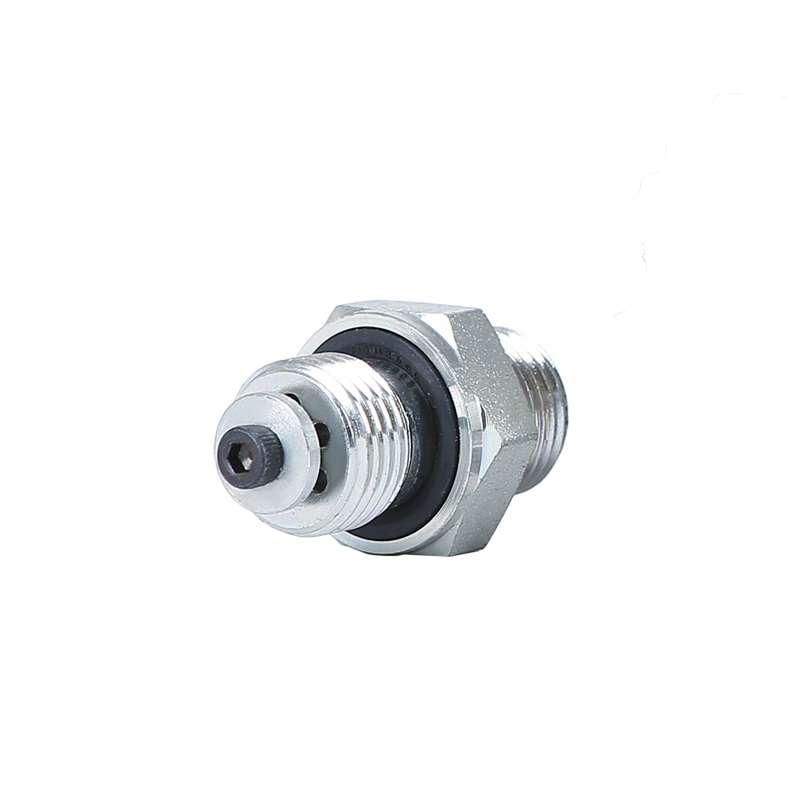
Engineers generally choose between two primary architectural formats. Your decision depends entirely on your system design, spatial constraints, and production volume. Understanding the distinctions between inline and cartridge designs helps you optimize both safety and manufacturing efficiency.
Inline models feature their own external housing. You install them directly into the port of a hydraulic cylinder or splice them into existing hard piping. They act as standalone protective units.
Best for: These units excel in retrofitting existing systems. If you need to upgrade an older machine to meet new safety standards, inline models offer a quick solution. They are highly effective for simple hydraulic circuits and single-cylinder protection tasks.
Pros and Cons: Their biggest advantage is ease of installation. You can easily attach them to existing hose lines without modifying the core hydraulic manifold. However, they remain highly exposed to the external environment. Flying debris or corrosive elements can damage the housing. Additionally, installing them introduces extra external connection points, which marginally increases the risk of slow weeping leaks over time.
Cartridge designs look like small, threaded inserts. They do not have an external block housing. Instead, you screw them directly into a specially machined cavity within a larger hydraulic manifold block or directly into a custom cylinder head.
Best for: We highly recommend cartridge variants for OEM manufacturing. They are ideal for integrated manifold blocks where designers must consolidate multiple control functions. They also dominate in space-constrained environments where external plumbing is not viable.
Pros and Cons: Cartridge formats are highly secure and virtually tamper-proof. Once installed inside a manifold, unauthorized operators cannot easily adjust or bypass them. They offer a very compact footprint. Conversely, they require custom manifold machining. You cannot easily adjust them post-installation because the working components sit deep inside the metal block.
To guide your selection process, review the following comparison table. This framework helps you shortlist the correct architecture based on your production scale and spatial footprint.
Evaluation Criteria | Inline Valve Format | Cartridge Valve Format |
|---|---|---|
Target Audience | Aftermarket, Maintenance Teams, Retrofitters | OEMs, System Integrators, Manifold Designers |
Installation Complexity | Low (Plumbs into existing lines) | High (Requires cavity machining) |
Space Requirement | Requires external clearance space | Zero external footprint (Integrated) |
Tamper Resistance | Moderate (Accessible externally) | High (Enclosed in manifold block) |
System Integration | Standalone component | Shares block with other logic valves |
Proper sizing dictates the success or failure of your safety circuit. A poorly specified component will either fail to close during an emergency or close constantly during normal operations. You must evaluate four critical dimensions to guarantee reliable performance.
You must accurately calculate the standard operating flow of your circuit. This is the maximum volume of fluid passing through the line during normal actuator extension or retraction. Once you know this baseline, you establish the closure threshold. Engineers refer to this as the reaction flow. Industry best practice dictates setting the reaction flow between 1.5 and 2.0 times the normal maximum flow. For example, if your cylinder requires 50 liters per minute during its fastest normal descent, you should calibrate the safety threshold to trigger between 75 and 100 liters per minute. This generous margin effectively prevents false triggering caused by minor operational surges.
Never underestimate the importance of matching port dimensions perfectly. Buyers frequently encounter issues when they try to mix thread standards. You must align the valve threads perfectly with your cylinder ports. Common standards include BSP, NPT, and SAE straight threads. Do not rely on restrictive adapters to force a fit. Adapters alter internal flow dynamics. They create turbulence and unwanted restrictions. This turbulence alters the velocity of the fluid, which can trick the internal poppet into closing prematurely.
Every component introduces some restriction into a hydraulic line. You must understand how an undersized unit creates parasitic heat generation and energy loss. If the internal passageway is too small for your flow rate, the fluid struggles to push past the poppet. This creates a severe pressure drop, known as Delta P. High Delta P wastes engine horsepower and superheats the hydraulic oil. You must request and carefully evaluate pressure loss curves from manufacturers. Use the chart below to guide your Delta P evaluation process.
Evaluation Step | Action Required | Expected Outcome |
|---|---|---|
1. Identify Max Continuous Flow | Check machine datasheet for peak normal flow rates. | Establish the baseline L/min requirement. |
2. Request Manufacturer Curves | Ask supplier for Delta P vs. Flow graph. | Obtain visual data of restriction levels. |
3. Map Flow to Curve | Locate your max flow on the X-axis and read the Y-axis pressure drop. | Determine the exact bar/PSI loss at peak operation. |
4. Verify Acceptability | Ensure the drop remains below 5% of total system pressure. | Confirm energy efficiency and prevent overheating. |
You must ensure the selected component handles your system's peak operational spikes. Do not size based solely on the continuous average pressure. Mobile hydraulic systems experience violent pressure spikes when loads suddenly shift or cylinders hit their mechanical end-stops. If your system averages 200 bar, but spikes to 350 bar during heavy digging or lifting, you must select a component rated for at least 350 bar. An underrated housing can crack or deform, introducing a new failure point into the machinery.
Field deployment introduces variables never seen on a drafting table. You must account for environmental changes, mechanical wear, and proper verification protocols to ensure long-term reliability.
Engineers must carefully address the cold start risk. Hydraulic oil viscosity changes drastically with temperature. In freezing weather, hydraulic fluid becomes incredibly thick and slow-moving. Because thick oil resists flowing through narrow gaps, it creates artificially high pressure drops across the poppet. This viscosity shift alters flow characteristics entirely. If you improperly calibrate the spring, the dense, cold oil can cause premature valve closure during the first few minutes of a morning shift. You must allow machinery to warm up, or specify a component designed to handle wide viscosity index variations.
Tuning the reaction gap requires precise mechanical adjustment. The gap dictates how far the poppet must travel to seal the port. You adjust this gap using precise feeler gauges on tunable models. Opening the gap allows more flow before triggering; closing the gap increases sensitivity. You must strike a delicate balance. The gap must guarantee life safety while permitting uninterrupted daily operation. For highly critical applications, many buyers prefer pre-set factory models. Factory calibration removes human error from the assembly line.
Testing and verification remain non-negotiable. You cannot simply install the component and assume it works. You must outline a necessity for controlled simulation. Maintenance teams must safely vent pressure and artificially simulate a hose rupture under a controlled, low-height load. This verifies the mechanism engages precisely at the specified threshold. Never deploy heavy lifting machinery without witnessing a successful test drop.
As you plan your next-step actions, we strongly recommend consulting directly with a hydraulic engineering partner. Do not guess on safety components. Bring your schematics and fluid dynamics data to a professional. Let them review your flow rates, oil types, and load profiles before you finalize procurement.
A properly specified safety circuit acts as the ultimate safeguard for your heavy machinery and your personnel. It is a critical, non-negotiable safety barrier for load-bearing hydraulic systems. Operating without one invites catastrophic physical damage and massive regulatory penalties. Protecting your assets requires rigorous technical evaluation, not guesswork.
To successfully navigate the shortlisting logic, follow a strict progression. First, determine your architecture by choosing between cartridge or inline formats based on your space and manufacturing capabilities. Next, calculate your flow thresholds accurately, ensuring a safe buffer above normal peak operations. Finally, verify the pressure drop curves to prevent unwanted heat generation and system inefficiency.
Do not leave life safety to chance. We encourage engineers and procurement managers to contact our technical sales team directly. Share your system datasheets, flow rates, operating pressures, and fluid types with us. Our experts will help you achieve precise component matching, guaranteeing total compliance and operational peace of mind.
A: Yes, depending on the model. Some inline models feature tunable adjustment screws, allowing technicians to alter the reaction gap using feeler gauges. However, many cartridge variants and safety-critical inline models are factory-set and permanently sealed. Manufacturers do this intentionally to prevent unauthorized tampering and ensure the safety threshold remains exactly as certified.
A: Sudden, aggressive control valve movements or extreme pressure spikes can mimic a line rupture. Additionally, operating a machine in cold weather with thick, high-viscosity oil increases internal pressure drops, tricking the poppet into closing. To solve this, you must recalibrate the flow threshold, allow the oil to warm up, or adjust operator handling procedures.
A: Generally, no. You typically place burst protection exclusively on the load-bearing side of the cylinder. For example, you mount it on the base port of a lifting cylinder to stop gravity-driven descent. However, highly complex bidirectional load applications might require specialized dual setups or more advanced load-holding counterbalance systems.


