Please Choose Your Language
Views: 0 Author: Site Editor Publish Time: 2026-04-17 Origin: Site


Engineers face a fundamental reality when designing fluid power circuits. While conceptually simple, specifying the correct pressure resolver is critical. It ensures system safety, fluid isolation, and overall hydraulic efficiency. Even a minor miscalculation in bypass leakage or shifting sensitivity can cause cascading failures down the line.
System designers rely heavily on these specific components daily. They solve complex redundancy and load-sensing challenges seamlessly. More importantly, they achieve this without introducing vulnerable electronic controls. Electronic sensors often fail in harsh, high-vibration industrial environments. Mechanical fluid logic offers a far more robust alternative.
Passive Logic Control: A shuttle valve acts as a hydraulic "OR gate," passively resolving pressure by allowing fluid from the highest-pressure source to flow while isolating the lower-pressure source.
Critical Applications: Essential for load-sensing circuits, hot oil cooling loops, and fail-safe redundancy systems.
Configuration Matters: Selecting between a standard 3 way shuttle valve, spring-biased, or zero-leak configuration dictates system safety and bypass leakage thresholds.
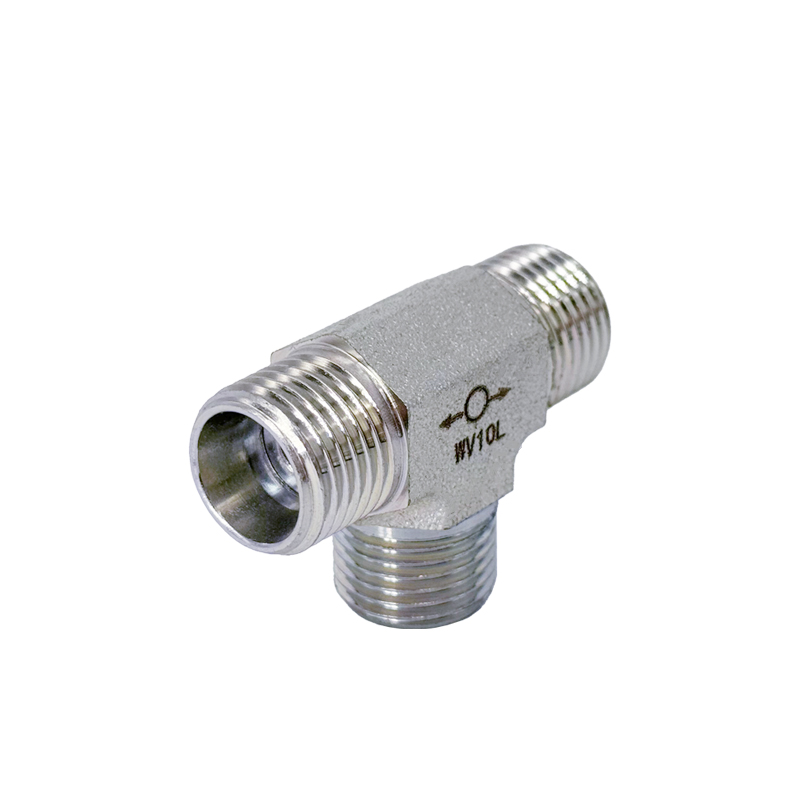
A shuttle valve operates fundamentally as a mechanical OR gate. Fluid logic requires physical mechanisms to dictate flow direction automatically. Inside the component, a free-floating ball or spool shifts mechanically based purely on differential pressure. When pressure enters one inlet port, it physically pushes the internal sealing element against the opposite inlet port. This action blocks the low-pressure source completely. It simultaneously opens a clear path for the high-pressure fluid to travel to the common work port.
We often refer to this component as a pressure resolver. The valve continuously monitors competing fluid lines. It does not require external sensors or timers. Instead, it automatically prioritizes the dominant pressure source in real time. If the primary pump pressure suddenly drops, the higher pressure from a secondary backup line instantly forces the internal element to shift. This provides immediate, seamless fluid transition to critical actuators.
Industrial machinery often demands simple automatic pressure selection or robust system redundancy. Specifying complex, electronically actuated directional control valves for these basic tasks wastes money. Electronic valves require wiring, programmable logic controllers (PLCs), and routine calibration. Passive mechanical resolvers eliminate these unnecessary layers of complexity. You achieve higher reliability at a fraction of the initial capital expense.
Mechanism: In modern machinery, variable displacement pumps must know exactly how much pressure the system actually needs. The resolver relays the highest load pressure from multiple directional valves back to the pump control. The pump then adjusts its swashplate angle accordingly.
ROI Impact: This drastically reduces energy consumption and heat generation. Traditional fixed pumps dump excess flow over relief valves, wasting massive amounts of diesel fuel or electricity. Load-sensing ensures the pump only delivers the exact required flow and pressure. Operations save thousands of dollars annually in energy costs.
Mechanism: Closed-loop hydrostatic transmissions suffer from severe heat buildup. The fluid continuously circulates between the pump and the motor without returning to a large cooling reservoir. A hot oil resolver system bleeds off a small portion of this hot, low-pressure fluid from the closed loop. It then routes this fluid through a heat exchanger before returning it to the main reservoir.
ROI Impact: Heat destroys hydraulic oil. By continuously purging thermal energy, you prevent fluid oxidation and viscosity breakdown. This extends the operational lifespan of high-value hydrostatic drives and prevents catastrophic mechanical failures.
Mechanism: Heavy lifting operations cannot tolerate power loss. If the main hydraulic line drops in pressure due to a burst hose or pump failure, gravity takes over. A resolver circuit allows a secondary or emergency accumulator line to seamlessly take over. The backup fluid instantly shifts the spool and clamps the winch brake shut.
ROI Impact: This guarantees regulatory compliance for offshore and construction equipment. More importantly, it protects heavy machinery and human personnel during catastrophic primary pump failures. One saved load easily pays for the entire hydraulic control manifold manifold ten times over.
You cannot use a one-size-fits-all approach when selecting these components. Different mechanical configurations solve entirely different engineering problems.
Manufacturers build these using a simple free-floating ball or spool design. They represent the most economical configuration for basic high-pressure selection. When you specify a standard 3 way shuttle valve, you get a reliable, low-cost component perfect for general load-sensing and pilot control. However, standard metal-to-metal seating does permit microscopic leakage.
This design features an internal spring. The spring holds the internal spool in a specific closed position until fluid meets a defined pressure threshold. System designers use these to prioritize a primary system over a secondary backup. The spring ensures a strict "non-interflow" state. This means the two inlet ports never open simultaneously, preventing even momentary cross-contamination between a clean primary line and an emergency line.
High-vibration environments cause free-floating balls to bounce off their seats. Detented configurations utilize mechanical locking mechanisms to hold the spool securely in place. They prevent premature shifting caused by minor pressure fluctuations or machine vibrations. Engineers commonly evaluate detented options for heavy-duty braking systems on mobile equipment.
Inverse configurations reverse the standard fluid logic. Instead of prioritizing high pressure, the internal mechanism blocks the high-pressure port and allows the low-pressure fluid to pass. Engineers use this highly specific configuration to prevent anti-cavitation and manage pressure intensification inside specialized cylinder circuits.
You must carefully choose how the component physically integrates into your machine:
Inline (Tubing-Mounted): Standalone blocks threaded directly into hydraulic hoses or steel tubes. Great for retrofitting older equipment.
Screw-In Cartridge Valves: Threaded components installed directly into custom machined aluminum or steel manifolds. They offer the most compact footprint.
Slip-In Configurations: Used primarily in massive, high-flow industrial presses where threaded cartridges would restrict fluid velocity.
Valve Type | Primary Mechanism | Best Application Use Case | Cost Profile |
|---|---|---|---|
Standard Selective | Free-floating ball / spool | Basic load sensing & pilot control | Low |
Spring-Biased | Spring-loaded internal seat | Primary/Secondary priority logic | Medium |
Detented | Mechanical locking detent | High-vibration braking systems | High |
Inverse | Reverse logic low-pass spool | Anti-cavitation prevention | Highly Specialized |
Every hydraulic circuit treats leakage differently. You must evaluate standard metal-to-metal seating against advanced polymeric designs. Metal seats offer high durability but allow acceptable minor bypass fluid (drops per minute). If you are designing circuits for gas-charged accumulators or critical emergency backups, this bypass is unacceptable. You must specify polymeric "zero-leak" designs. These soft seats form a perfect seal, ensuring pressurized accumulators do not bleed down overnight.
Sensitivity matters immensely in load-sensing networks. You must determine the minimum pressure differential (psid) required to shift the internal element. High-sensitivity applications require extremely tight manufacturing tolerances. Some advanced aerospace components shift reliably at less than 1 psid. If you select a component requiring 50 psid to shift, your control circuit will feel sluggish and unresponsive to operator inputs.
Internal passages restrict fluid velocity. You must size the internal passage to handle the maximum required flow without introducing an unacceptable pressure drop. Excessive ΔP generates unwanted heat and robs mechanical power from the actuators. Always consult the manufacturer's flow curves before finalizing a manifold design.
We must assess the brief millisecond when the internal spool physically shifts. Logic design dictates two options:
Make-Before-Break: All ports momentarily connect during the shift. This causes a tiny volume of fluid to swap between lines. Do not use this if isolating contaminated fluid from clean fluid is critical.
Break-Before-Make: The spool completely seals both inlet ports before moving to open the new flow path. This guarantees zero cross-contamination, making it mandatory for strictly isolated redundancy circuits.
Continuous micro-leaks across worn valve seats cause severe long-term problems. They degrade overall system efficiency and generate localized heat. More dangerously, internal bypass leakage can cause uncommanded actuator movement over time. An idle hydraulic cylinder might slowly drift outward if fluid creeps past a degraded internal seal. This creates a severe safety hazard for maintenance personnel.
Fluid cleanliness dictates component lifespan. Free-floating ball designs can jam entirely if fluid particulate levels exceed required ISO cleanliness standards. A single metallic flake can prevent the ball from seating properly. A robust filtration strategy represents a hidden, yet mandatory, implementation cost. Aim for ISO 4406 cleanliness levels of 18/16/13 or better to ensure reliable mechanical shifting.
Industrial systems occasionally present near-equal pressures on both inlet ports. When pressures oscillate rapidly, the internal spool cannot decide which way to shift. The component begins to "chatter," vibrating violently back and forth. This leads to severe mechanical wear, destroyed internal seats, and intense hydraulic noise. You mitigate chatter by introducing upstream damping orifices or selecting spring-biased models to enforce a clear priority.
Mastering mechanical fluid logic gives you a distinct advantage in industrial design. You eliminate unnecessary electronic sensors while vastly improving machine reliability. We recommend shortlisting your components based on three strict criteria: acceptable leakage rates, required shifting sensitivity, and specific mounting constraints.
Your next step requires careful manufacturer coordination. Advise your engineering team to consult precise flow and pressure drop charts for specific cartridge sizes. Always verify fluid compatibility with internal sealing materials, especially when specifying zero-leak variants. Secure performance prototype data before finalizing your production manifold blocks.
A: A check valve manages exactly one flow path. It allows fluid to move forward while strictly preventing any reverse flow. In contrast, a 3 way shuttle valve arbitrates between two active inlet paths to feed a single outlet. It acts as an automatic selector, constantly comparing two separate lines and choosing the higher pressure.
A: Yes. They are conceptually identical in both environments, functioning as basic OR gates. However, hydraulic variants are engineered with heavier-duty steel or brass materials. They feature entirely different seat geometries and much higher pressure ratings to handle extreme fluid viscosity and immense barometric forces safely.
A: Fluid contamination represents the primary cause of failure, as particulate debris prevents proper seating. Additionally, worn O-rings and degraded seals lead to severe cross-port leakage. Finally, sudden and severe pressure spikes can cause internal mechanical fatigue, permanently jamming the spool or ball inside the housing.